
Charging Biochar: Why, How, and Additional Tips

Updated: May 7
Biochar, a charcoal-like substance made by heating organic materials with limited oxygen, is a powerful tool for sustainable gardening and agriculture. Its porous structure, with a massive surface area, acts like a sponge in the soil, holding onto nutrients and water for plants to use.
However, freshly produced biochar can initially surprise gardeners by grabbing nutrients away from plants. This is where "charging biochar" becomes important. With the right charging material selected based on your needs, which we will explain later, you can maximize biochar's potential to boost your crop growth and increase yield.
Let's dive in.
Table of Contents
Why Charge Biochar?
Imagine biochar as a sponge with a vast surface area. When raw biochar is added directly to soil, it adsorbs nutrients and microorganisms from the surrounding soil, temporarily reducing plant-available nutrients. This effect is sometimes described as nutrient immobilization or short-term nutrient lock-up.
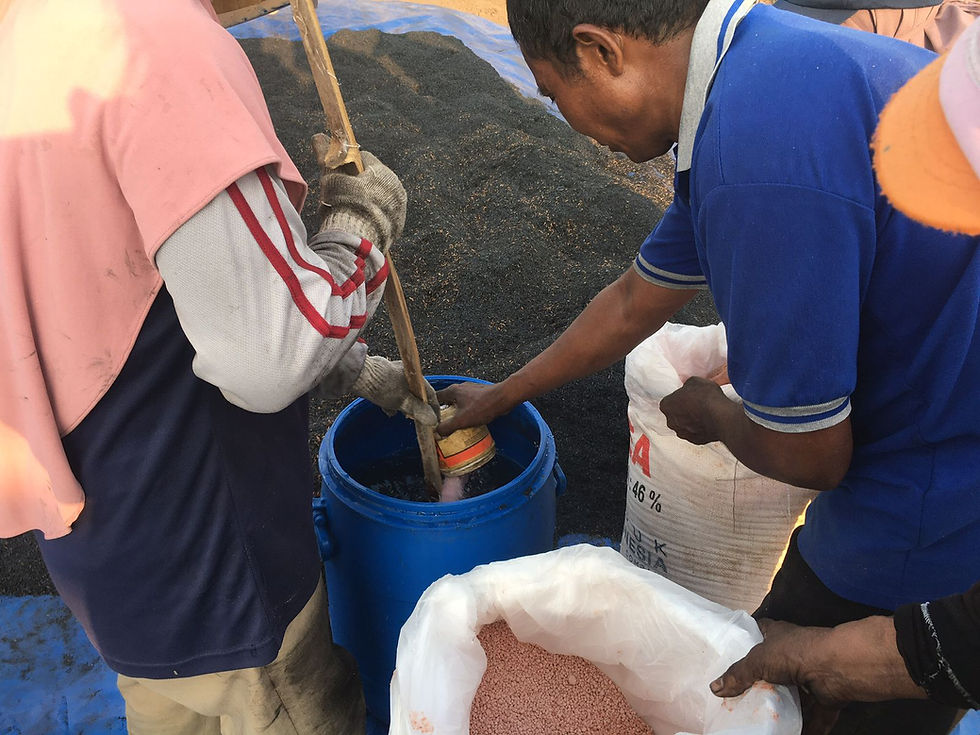
Charging biochar fills those pores before soil application. By doing so, biochar becomes a nutrient reservoir rather than a nutrient sink. Once charged, it releases nutrients slowly and provides long-term habitat for beneficial soil microbes.
Charging vs Inoculating vs Activating Biochar
The terms “charging,” “inoculating,” and “activating” biochar are often used interchangeably, but they refer to slightly different processes:
Charging biochar focuses on loading nutrients into biochar pores.
Inoculating biochar emphasizes introducing beneficial microorganisms. Biochar’s porous structure provides an ideal habitat for microbes, but it must first come into contact with biologically active material for microbial colonization to occur.
Conditioning or activating biochar usually combines both nutrient loading and microbial colonization over time.
In practice, these processes often occur simultaneously. Materials such as compost, worm castings, and compost tea contain both nutrients and living microorganisms. When biochar is mixed with these materials, it becomes charged with nutrients while also being inoculated with beneficial microbes.
For this reason, most real-world methods accomplish both charging and inoculation at the same time, even if one effect is emphasized more than the other.
6 Common Methods to Charge Biochar
While the specific materials may vary, effective charging methods share a common structure:
Introduce nutrient-rich input
Add water so the nutrients can move into the biochar’s pores
Provide adequate contact time for adsorption within the biochar matrix.
Now let’s take a look at the six common materials used to charge biochar.
1. Co-Compost Charging
This is a simple and low-maintenance approach. Mix biochar with your compost pile at a ratio of 10% biochar to 90% compost. Over time, the microbes and nutrients from the compost will migrate into the biochar, creating a charged product in a few weeks to months.
Best for: Long-term soil health and large-scale gardening. It produces the most stable, "mature" biochar that won't cause any hiccups when added to sensitive plants.
2. Compost Tea Soak
Compost tea, a liquid extract teeming with beneficial microbes, can be used to rapidly charge biochar when immediate application is needed.
Pro tip: Add a sugar source (like molasses) to the compost tea and aerate it up to 24 hours before mixing it with biochar. This will jumpstart the microbial colonization of the biochar pores.
Best for: Situations requiring a fast biological response, such as preparing biochar for top-dressing existing plants that need an immediate boost.
3. Worm Castings Soak
Worm castings, contain high concentrations of humic acids and plant growth hormones (like auxins). The biochar absorbs these liquid signals, which later act as triggers for plant root development.
To charge biochar with worm castings, soak the biochar in a solution of water mixed with worm castings tea for a day or two.
Best for: Seed starting and transplanting young crops, where the hormonal and enzymatic content of the charged biochar can accelerate early-stage plant growth.
4. Manure Soak
Animal manure, while requiring proper handling and composting to avoid burning plants, can be a potent source of microbial life.
Soak the biochar in a diluted manure solution (a ratio of 1:1) for a week or two, ensuring proper ventilation and following safety guidelines. However, the resulting biochar should still be aged or applied to the soil well before planting (at least 2–4 weeks) to ensure the nitrogen has stabilized
Best for: High-nitrogen-demand crops like corn or leafy greens, and for farmers who need to manage large volumes of animal waste while retaining its fertilizing value.
5. Mineral Fertilizer Charging
You can rev up biochar with mineral fertilizer by making a soak. First, dilute your fertilizer with water at half its usual strength. Then, submerge the biochar in the solution and let it sit uncovered for a few days, keeping it moist. This allows the biochar to absorb the nutrients from the fertilizer, making them more available to plants later.
Best For: Conventional gardeners and farmers who use N-P-K granules but want to reduce runoff and make their fertilizer last longer.
6. Poultry Bedding Charging
Prepare biochar for about 5 to 10% of the total bedding weight. Spread the biochar on the bedding evenly, and collect the biochar after two to four weeks. As the chickens use the coop, their manure and urine will naturally "charge" the biochar by infusing it with nutrients.
Moreover, this biochar-enriched bedding absorbs moisture effectively, reducing ammonia emissions and the need for frequent bedding changes.
Additional Tips for Effective Charging
When choosing the best type of charging material for your biochar, consider matching the material to your intended use. For example, if using biochar for vegetable gardens, you might prioritize introducing beneficial bacteria for nutrient cycling.
You can also do a soil test first to know if your soil is in need of any specific nutrients, and then search for the right charging materials that contain that nutrient.
During the soaking process, gently stir or aerate the soaking solution to promote an even distribution of microbes and nutrients throughout the biochar.
Don’t forget about safety as well. When using animal manure or other organic materials that may harbor pathogens, ensure proper handling and dilution to avoid introducing harmful bacteria into your soil.
The Benefits of Charged Biochar
Enhanced nutrient retention. Charged biochar acts like a magnet for essential plant nutrients, preventing them from leaching out of the soil. Biochar also releases those nutrients slowly, making them available for a long time.
Improved soil structure. The microbial activity within charged biochar helps create a crumbly soil structure, promoting better aeration and drainage. This leads to healthier root development and increased water infiltration.
Boosted plant growth. Charged biochar provides a readily available source of nutrients and beneficial microbes for plants, leading to improved growth, yield, and overall plant health.
Increased carbon sequestration. By storing carbon within its structure, charged biochar helps mitigate climate change by removing greenhouse gasses from the atmosphere.
Conclusion
By charging biochar, you unlock its full potential as a soil amendment. This simple process transforms raw biochar into a powerhouse for improved plant growth, healthier soil, and increased carbon sequestration.
With a little planning and the right charging method, you can harness the incredible benefits of biochar to create a thriving and sustainable agriculture.


Comments